
Barnwell Projected Versus Actual Release
A projected date is a calculation based on the sentence record, jail credit, governing law, and credits earned so far. It can also be called a tentative or max-out type date on a live agency screen. The exact label should be copied from the current record. It is not a promise that a person will walk out on that date.
Actual release is the custody event recorded by the agency. A detainer, which is another authority's request to hold or receive a person, can prevent community release. A transfer can end one agency's custody while another begins. Court amendments, credit corrections, discipline, and parole action can also move a projected date.
Find Barnwell Release Dates
The ordinary SCDC incarcerated-inmate search is for current state custody. Its official disclaimer says it excludes released SCDC offenders, county sentences, and people under parole, probation, or community supervision. A person absent from that search is not therefore proven released.
- Identify the custodian. Use Barnwell County Detention Center for a county detainee and SCDC for a sentenced state prisoner.
- For current state custody, search by SCDC number, SID, or the offered name fields and open the correctly matched detail record.
- Copy the live date label, value, source, and retrieval time exactly. Do not turn a projected or max-out field into a guaranteed date.
- For a local jail sentence, ask the detention center or sentencing court for the sentence sheet, jail credit, local calculation, and holds.
- After state custody ends, use the separate SCDC Released Inmate Search and PPP when supervision may follow. The Barnwell release search links those paths.
The SCDC current-custody source matches the successful manifest image below.
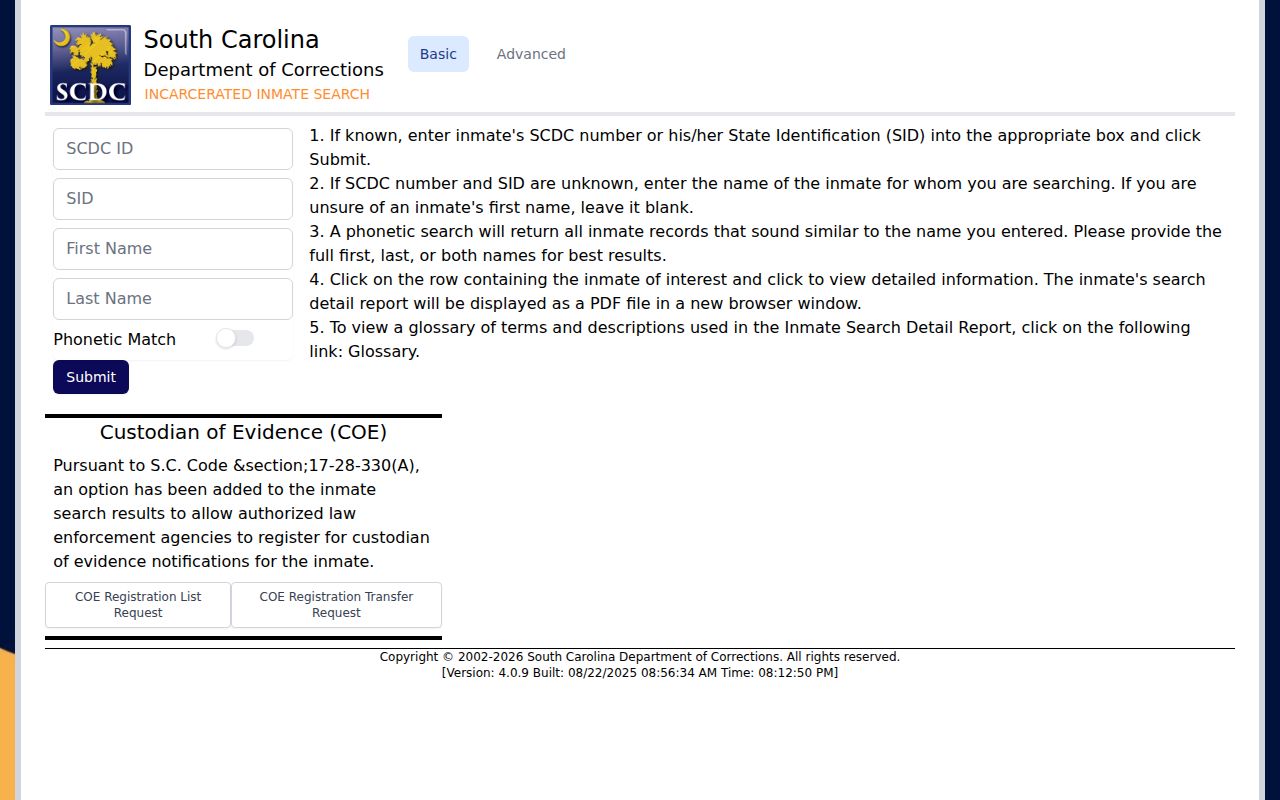
If the person is absent, do not convert that blank into a release finding. Verify spelling, SCDC or SID number, and the retrieval time. The standard search excludes released offenders by design. Search the separate released-inmate tool across the likely dates, then check PPP if parole or community supervision may be active. A county sentence will not appear merely because the case began in Barnwell.
SCDC Release Credit Rules
South Carolina starts with the court's sentence structure and credited jail time. Consecutive terms add in sequence, while concurrent terms overlap under the sentencing order. Mandatory minimums, offense dates, and sentence class matter. SCDC then applies only the credits allowed for that sentence.
South Carolina Code Section 24-13-210(A) gives an eligible SCDC inmate who is not serving a defined no-parole offense a good-conduct deduction of twenty days for each month served, subject to conduct and forfeiture. Subsection (B) provides three days per month for a no-parole offense. Good conduct is earned, so a disciplinary loss or later restoration can move the displayed date.
Section 24-13-230 authorizes earned work and education credits. For a no-parole offense, those credits cannot reduce custody below the 85 percent service floor in Sections 24-13-100 and 24-13-150. That floor is not “parole at 85 percent,” and it does not mean every South Carolina prisoner serves exactly that share. Covered people are not parole eligible under that rule and may move into statutory community supervision after custody.
For older or otherwise parole-eligible sentences, Section 24-21-610 sets eligibility fractions and exclusions. It includes different rules for violent and other crimes, plus special treatment for long or life terms. Eligibility only permits consideration by the parole board. A grant can still require release planning, conditions, processing, and clearance of detainers before departure.
The official SCDC legal-information page gives the calculator context shown in the successful manifest capture.

Why Barnwell Release Dates Move
A displayed date is a snapshot. It can change when the legal sentence, credit balance, or custody path changes. Ask for the retrieval time and check again close to the expected release.
| Factor | Possible effect |
|---|---|
| Amended court order | Changes the term, sequence, or credited jail time. |
| Concurrent or consecutive correction | Changes how multiple sentences overlap or aggregate. |
| Earned credits | May reduce the projected date where law permits. |
| Credit forfeiture or restoration | Can move the computation later or earlier after discipline review. |
| Detainer or hold | May prevent community release even when one sentence ends. |
| Parole action | A grant, denial, or delay may change the custody path for an eligible sentence. |
| Appeal or recalculation | Can require records staff to revise the projected value. |
Parole eligibility is only a point at which an eligible person may be considered. It is not a release date. Good-behavior deductions do not calculate that eligibility, while earned work credits can affect it in the circumstances governed by Sections 24-21-610 and 24-21-635.
Program participation can also affect earned credit where the governing law and SCDC policy allow it. Yet no public estimate should assume future credit. Use only credits already reflected in the official computation. If the displayed date moved, ask which order, credit transaction, disciplinary decision, or hold caused the change. That question is more reliable than recalculating a complex sentence from a news report or docket summary.
Confirm Barnwell Release Timing
For SCDC custody, record the current detail field and retrieval time, then confirm it with SCDC records staff shortly before release. The separate SCDC Released Inmate Search is the proper public tool after state custody ends. Its date-range and county controls do not turn it into a Barnwell jail log.
For county custody, call Barnwell County Detention Center at 803-541-0283. Ask for the calculated local-sentence date, credited jail time, and any hold or transfer instruction. The court's sentencing sheet supplies legal authority, while the jail record supplies the actual exit. If notification is useful, complete a VINELink Check, but still verify the event with the source agency.
A final status may be community release, SCDC transfer, another-county transfer, federal transfer, or ICE custody. Keep those systems separate. “Released by Barnwell” can mean only that Barnwell's custody ended.
SC SAVIN can provide a pending custody-change alert, but its event can lag and may describe a transfer. PPP verifies active post-release supervision, not every former prisoner. A person can finish custody with no active PPP record, while probation may begin without a state-prison stay. Use each source only for the fact it controls and retain the time of every dynamic check.
Barnwell Local Sentence Credits
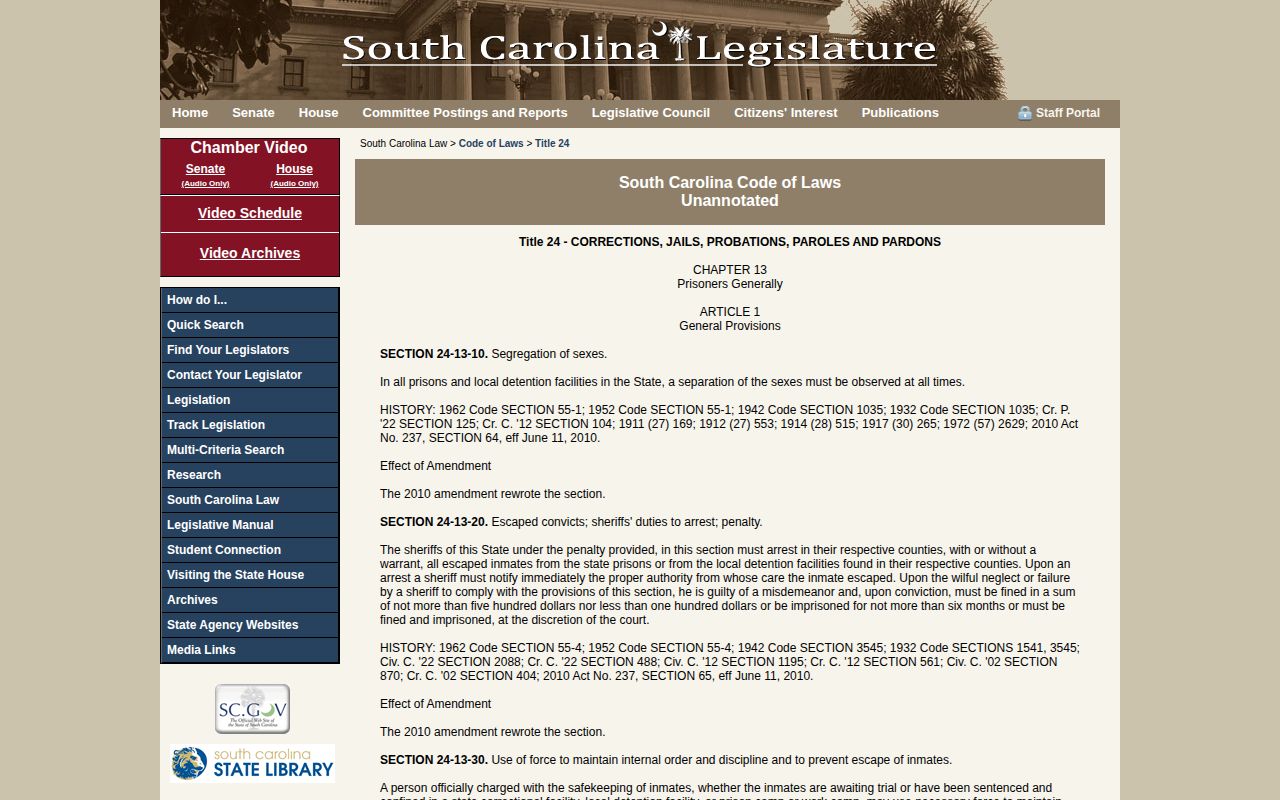
A Barnwell County jail sentence is not calculated through the public SCDC screen unless the person is an SCDC inmate housed under a designated-facility agreement. Section 24-13-210(C) addresses eligible local detention sentences and provides one day of deduction for every two days served under its statutory conditions. Local officials control forfeiture for a local sentence.
Barnwell County has not published a local good-time calculation policy or weekend-release rule in the reviewed sources. Do not import SCDC's twenty-days-per-month formula into a county sentence. Request the jail's actual computation and the court's sentence sheet. Ask staff to identify any credit loss, hold, or order that changes the expected date.
The official Title 24 sentence-credit text is captured in the manifest image below.
SCDC Calculator Is an Estimate
The public SCDC projected-release calculator provides an estimate and disclaimer, not an official individual computation. It cannot resolve an amended order, disputed jail credit, sentence stacking, an unlisted hold, or future earned-credit changes.
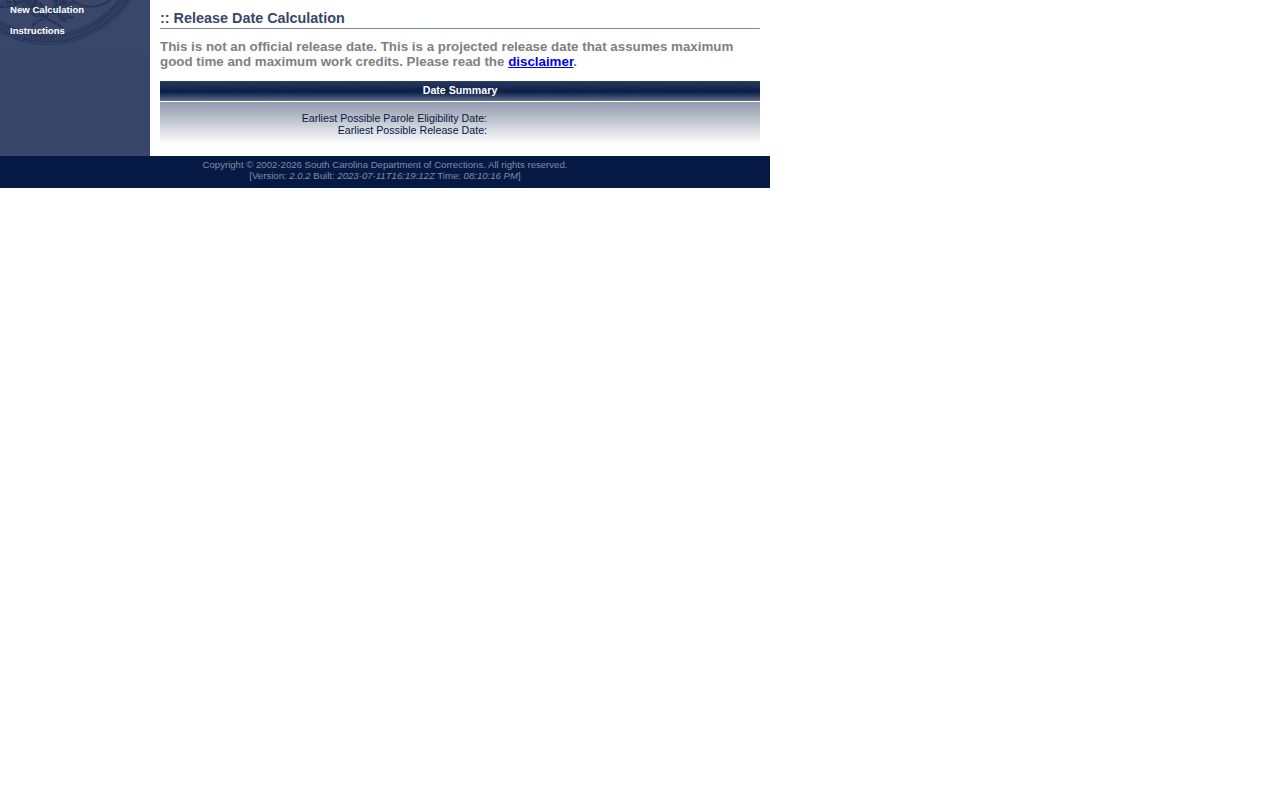
Use a calculator result as a question for the custodian. Give staff the person's identifier, sentencing court, sentence date, and the field being checked. Ask for the official value and its calculation date rather than presenting a private estimate as the release date.
Before calling, separate the pieces of the sentence. Note each case number, the sentence imposed, whether terms run together or one after another, and the jail credit shown by the court. Ask which offense rules control and whether a mandatory minimum applies. For SCDC custody, request the current projected or max-out type field exactly as maintained. For local custody, ask Barnwell staff to state the local calculation and identify any credit that was withheld or lost.
A release date and a discharge date can also differ. Release can end physical custody while parole or community supervision continues. Discharge ends the sentence or supervision obligation recorded by the responsible agency. PPP is the proper public source for active South Carolina supervision. Its absence does not prove that all obligations ended, since not every release carries supervision and completed records may not remain in the active search. Ask for the actual termination or discharge record when sentence completion is the question.
Court records supply legal context but not the final jail-door time. A docket can show a sentence, an amended order, bond, or dismissal. It may not show when staff cleared every hold and completed processing. Likewise, a parole grant does not promise same-day departure. Conditions, release planning, detainers, and agency processing can remain. Match each fact to its source, and never merge a court date, projected date, and actual exit time into one event.
For a date that is close, check again. Dynamic SCDC data are not live to the minute, and the research notes that current inmate information may reflect the prior midnight. SC VINE depends on agency transmission. Write down the retrieval time for both. If the two sources differ, the facility or SCDC records office must resolve the conflict. A dated, source-specific statement is more accurate than an undated claim that a person “gets out” on a fixed day.